
Before and after in Japanese|の前に・のあとで
Put two activities in order. Start with a noun such as 食事, then compare the verb patterns: 食べる前に and 食べたあとで. The verb form changes because the two patterns are built differently.
何を先にしますか。名詞と動詞を使って、することの順番を話しましょう。
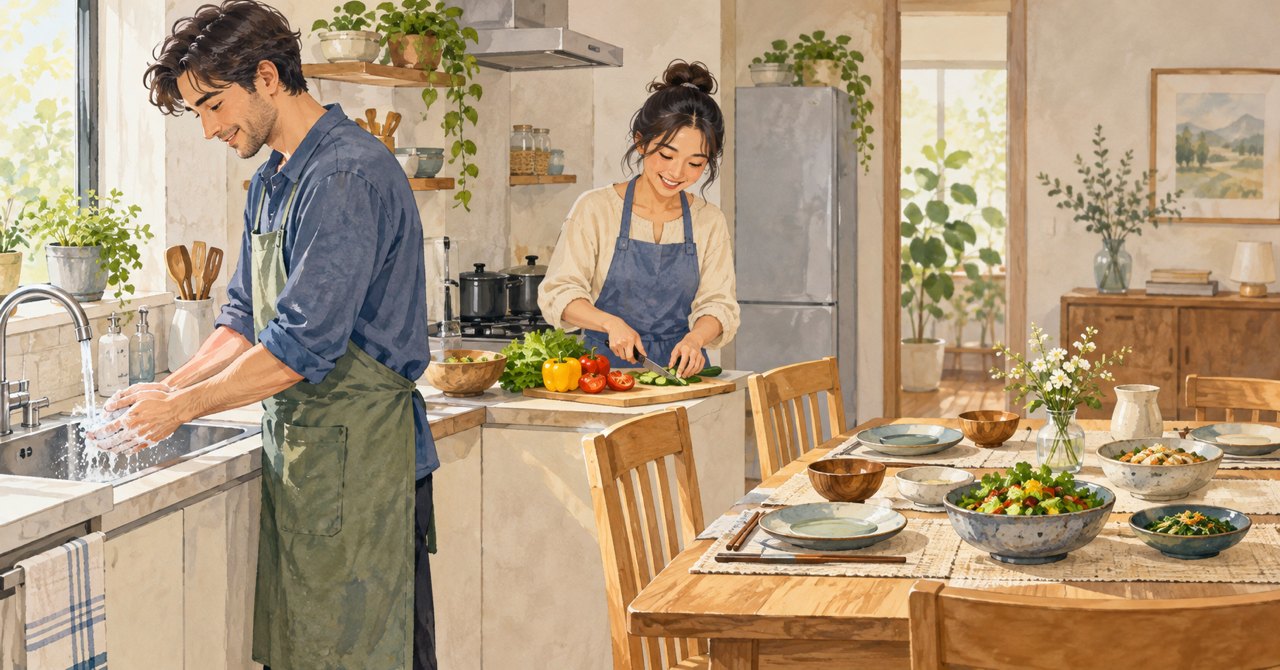
Start with a noun: Nの前に / Nのあとで
食事の前に means 'before the meal'; 食事のあとで means 'after the meal.' Put の between the noun and 前 or あと. The rest of the sentence tells the activity you do at that point.
『食事の前に』は、食事より先です。『食事のあとで』は、食事が終わってからです。
Use a dictionary-form verb before 前に
食べる前に、手を洗います means 'I wash my hands before eating.' Use the dictionary-form 食べる, not the polite form 食べます, directly before 前に.
『食べる前に、手を洗います』と言います。『食べます前に』とは言いません。
Use a ta-form verb before あと
食べたあとで、片付けます means 'I tidy up after eating.' The ta-form before あと marks the action that comes first in the sequence. The whole sentence can still be a routine or a future plan.
『食べたあとで、片付けます』では、食べることが先です。明日の予定でも、『食べたあとで』と言えます。
Read the order, not just the written position
In 散歩の前に、朝ご飯を食べます, breakfast happens first even though 散歩 appears first in the sentence. Check the meaning of 前 or あと before deciding the order.
『散歩の前に、朝ご飯を食べます』では、朝ご飯が先です。文に出てくる順番だけで決めないでください。
Examples / 例
The following scenes and exercises were written for this lesson. They do not describe an actual service or event.
食事の前に、手を洗います。
I wash my hands before the meal.
Handwashing comes first.
授業のあとで、買い物をします。
I go shopping after class.
Class comes first.
寝る前に、本を読みます。
I read a book before going to bed.
読む happens before 寝る.
明日は、朝ご飯を食べたあとで、出かけます。
Tomorrow, I will go out after breakfast.
食べた does not make the whole sentence about yesterday.
Practice / 練習
Read each situation. Say your answer before opening “Answer and explanation.”
Q1. 食事の前に、手を洗います。Which happens first?
Answer and explanation
手を洗います。
前に places handwashing before the meal.
Q2. Choose the form:(寝る/寝ます)前に、本を読みます。
Answer and explanation
寝る前に、本を読みます。
Use the dictionary-form before 前に.
Q3. Choose the form:(食べる/食べた)あとで、片付けます。
Answer and explanation
食べたあとで、片付けます。
Use the ta-form before あとで.
Q4. 授業のあとで買い物をします。Which is second?
Answer and explanation
買い物です。
Class happens first; shopping happens after it.
Words / 言葉
| Japanese | English |
|---|---|
| 前 | before |
| 後 | after |
| 食事 | meal |
| 順番 | order |
| 片付けます | tidy up |
A phrase to use
すみません。授業のあとで、質問してもいいですか。
Excuse me. May I ask a question after class?
Sources
Grammar reference: The Japan Foundation, Irodori: Japanese for Life in Japan, Elementary 1. The explanations here are concise original summaries; examples and practice questions are original.