月曜日は火曜日より人が多いです。
There are more people on Monday than on Tuesday.
A は B より + adjective.
 Japanese by CCNJapanese for life in JapanAdd on LINE
Compare two things with より and のほうが. Put より after the thing you compare against.
『AはBより〜』『AのほうがBより〜』で、二つを比べます。『より』の前の言葉が、比べる相手です。
Write A は B より + adjective. より marks the thing you compare against (B), and the sentence says A has more of that quality. 月曜日は火曜日より人が多いです means Monday has more people than Tuesday.
『月曜日は火曜日より人が多いです』のように、比べる相手の後に『より』を付けます。
午前のほうが午後より短いです also compares two things. のほう shows that you are comparing. If it is clear what you compare with, you can leave out より and say 午前のほうが短いです.
『のほう』は、比べていることを強く言う形です。何と比べるかが分かるときは、『Bより』を言わなくてもいいです。
To ask which of two things is more…, say 窓口AとBと、どちらが近いですか. A natural answer is AのほうがBより近いです.
二つを比べて聞くときは、『AとBと、どちらが〜ですか』と言います。答えは『AのほうがBより〜です』です。
If you swap A and B, the meaning reverses: 月曜日は火曜日より多い and 火曜日は月曜日より多い say opposite things. The adjective is used in its usual form, with です in polite speech.
AとBを入れ替えると、意味が反対になります。形容詞は、いつもの形で使います。
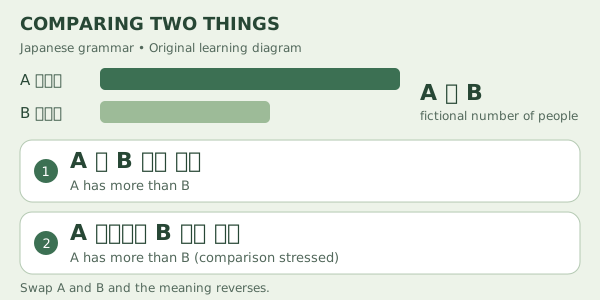
These scenes and exercises are fictional examples written for this lesson.
月曜日は火曜日より人が多いです。
There are more people on Monday than on Tuesday.
A は B より + adjective.
午前のほうが午後より待ち時間が短いです。
The waiting time is shorter in the morning than in the afternoon.
Aのほうが Bより + adjective.
この用紙のほうがあの用紙より簡単です。
This form is simpler than that form.
簡単 is a na-adjective; it is used as usual before です.
窓口AとBと、どちらが近いですか。
Which counter is closer, A or B?
Ask with どちらが.
Say your answer before opening the explanation.
Q1. Complete: 月曜日は火曜日( )人が多いです。
より
より marks the thing you compare against.
Q2. Complete: 午前( )午後より短いです。
のほうが
のほうが is used on the side that has more of the quality.
Q3. Monday has 40 people and Tuesday has 20 (fictional). Choose: 月曜日は火曜日より多いです / 火曜日は月曜日より多いです。
月曜日は火曜日より多いです。
The larger side comes first, and the word before より is the one you compare against.
Q4. Make a sentence that compares two days of the week. Example answer:
水曜日は金曜日より人が少ないです。
Other answers are possible. Use より after the day you compare against.
| Japanese | English |
|---|---|
| 窓口 | counter; service window |
| 待ち時間 | waiting time |
| 書類 | document; papers |
| 曜日 | day of the week |
| 短い | short |
月曜日と火曜日と、どちらが空いていますか。
Which one is emptier, Monday or Tuesday?
Grammar reference: The Japan Foundation, Irodori: Japanese for Life in Japan, Elementary 2. Explanations are concise original summaries; practice examples are original and fictional.