明日、友達と昼ご飯を食べに行きます。
Tomorrow I will go out to eat lunch with a friend.
食べ is the purpose stem.
 Japanese by CCNJapanese for life in JapanAdd on LINE
Explain the purpose of going somewhere with the masu-stem plus に行きます. Use the same pattern in an invitation.
『食べに行きます』では、何をするために行くかを伝えます。
Remove ます and add に行きます: 食べます→食べに行きます、見ます→見に行きます.
『食べますに行きます』とは言いません。『ます』を取ります。
A destination can come before へ or に. The verb stem before に tells the purpose: 図書館へ本を借りに行きます.
『図書館へ』は行く場所、『借りに』は目的です。
V-stem+に行きませんか is an invitation to go and do something. It is a question, not a report of a completed trip.
『見に行きませんか』と聞いて、一緒に行こうと誘えます。
食べに行きました reports a completed outing. 食べに行きます can describe a plan. The purpose stem 食べ remains the same.
昨日の話は『行きました』、これからの話は『行きます』にします。
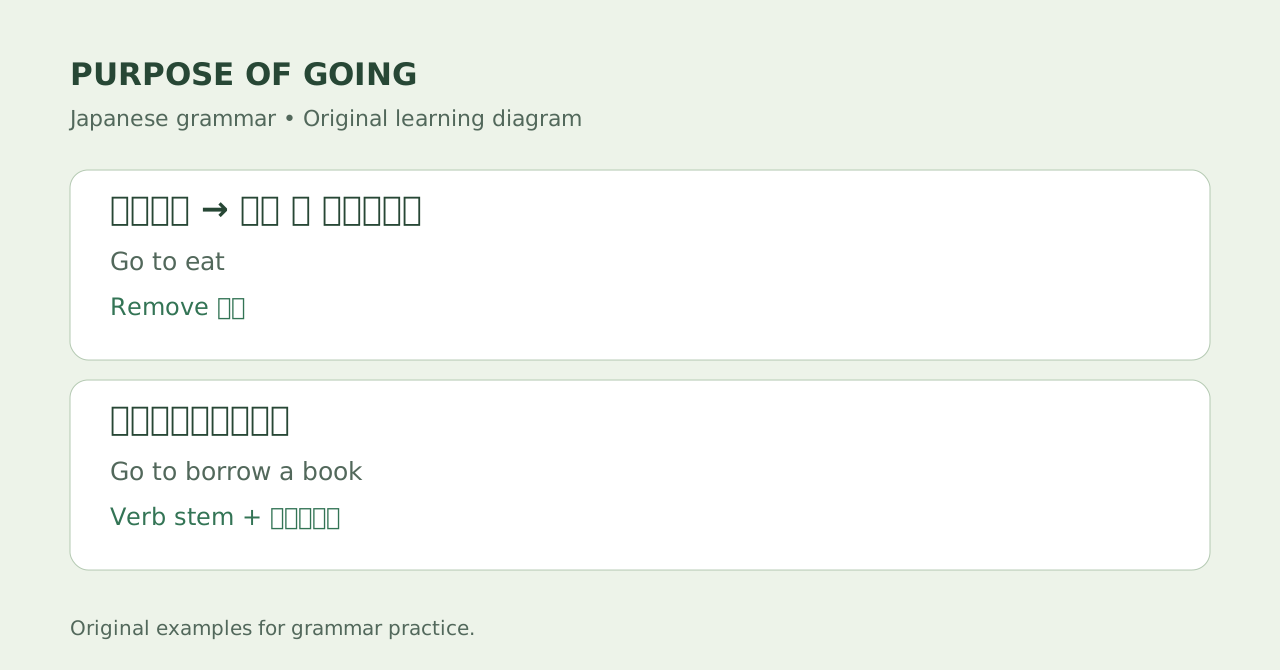
These scenes and exercises are fictional examples written for this lesson.
明日、友達と昼ご飯を食べに行きます。
Tomorrow I will go out to eat lunch with a friend.
食べ is the purpose stem.
図書館へ本を借りに行きます。
I will go to the library to borrow a book.
Borrowing is the purpose.
一緒に映画を見に行きませんか。
Would you like to go and see a film together?
An invitation.
昨日、靴を買いに行きました。
Yesterday I went to buy shoes.
買います becomes 買い.
Say your answer before opening the explanation.
Q1. Complete: 見ます→見( )行きます。
に
Remove ます, then add に.
Q2. Say that you will go to buy a book.
本を買いに行きます。
買います→買い.
Q3. Which part names the purpose in 図書館へ本を借りに行きます?
本を借りに。
図書館へ names the destination.
Q4. Invite someone to go and eat together.
一緒に食べに行きませんか。
Use 行きませんか for an invitation.
| Japanese | English |
|---|---|
| 目的 | purpose |
| 借ります | borrow |
| 映画 | film |
| 靴 | shoes |
| 一緒に | together |
一緒に見に行きませんか。
Would you like to go and see it together?
Grammar reference: The Japan Foundation, Irodori: Japanese for Life in Japan, Elementary 1. Explanations are concise original summaries; practice examples are original.