子どものとき、よく絵を描きました。
I often drew pictures when I was a child.
Noun + のとき.
 Japanese by CCNJapanese for life in JapanAdd on LINE
Describe a time or situation with とき. The connector changes for nouns, na-adjectives and i-adjectives.
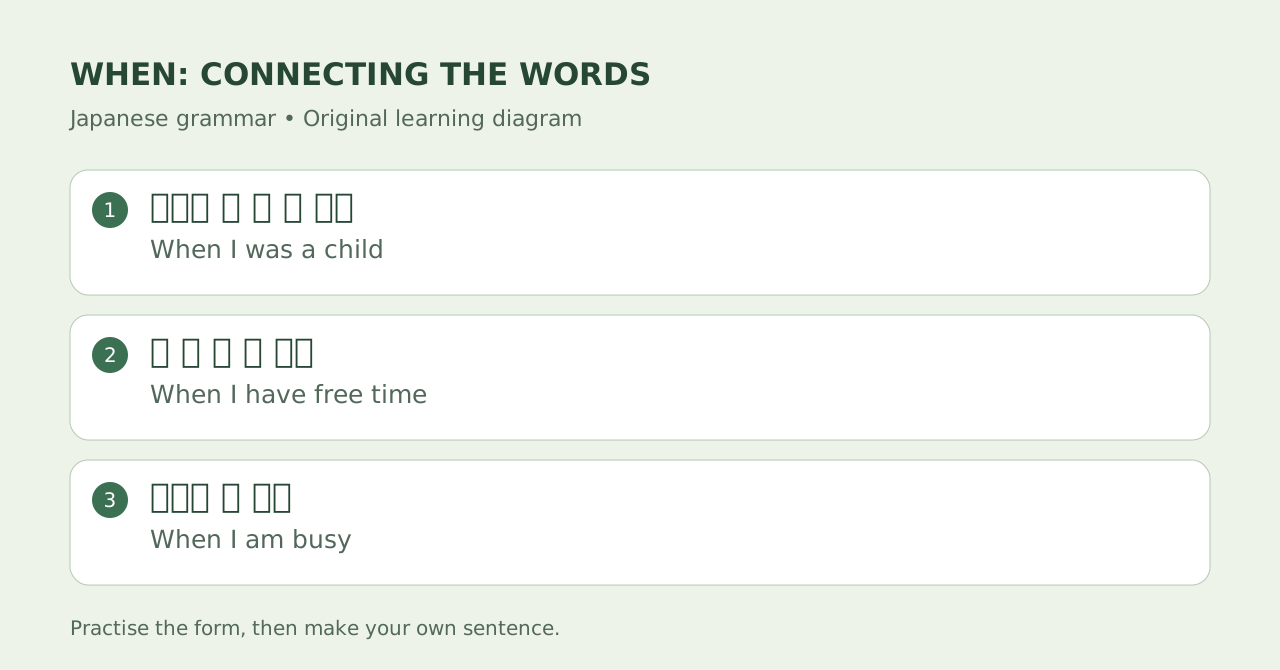
『子どものとき』『暇なとき』『忙しいとき』を比べます。『とき』の前の言葉で、形が変わります。
子どものとき means when I was a child. Use noun + の + とき. The rest of the sentence tells what happens or happened at that time.
名詞では『子どものとき』『高校のとき』のように、『の』を使います。
暇なとき means when you have free time. Use the adjective stem + な + とき.
ナ形容詞では、『暇なとき』のように『な』を使います。
忙しいとき means when you are busy. Do not add の or な to the i-adjective in this pattern.
イ形容詞では『忙しいとき』です。『忙しいなとき』にはなりません。
子どものとき、よく絵を描きました describes a past event. 暇なとき、本を読みます describes what you do in that situation. This lesson focuses on noun and adjective connections, rather than verb-tense contrasts before とき.
後ろの文で、何をするか、何をしたかを言います。まず、名詞と形容詞のつなぎ方を練習しましょう。
These scenes and exercises are fictional examples written for this lesson.
子どものとき、よく絵を描きました。
I often drew pictures when I was a child.
Noun + のとき.
暇なとき、本を読みます。
I read books when I have free time.
Na-adjective + なとき.
忙しいとき、短いメモを書きます。
When I am busy, I write a short note.
I-adjective + とき.
静かなとき、音楽を聞きます。
I listen to music when it is quiet.
静か is a na-adjective.
Say your answer before opening the explanation.
Q1. Complete: 子ども( )とき。
の
子ども is a noun.
Q2. Complete: 暇( )とき。
な
暇 is a na-adjective.
Q3. Choose: 忙しいとき / 忙しいのとき。
忙しいとき。
Keep い and add とき.
Q4. Make a sentence about what you do when you have free time. Example answer:
暇なとき、本を読みます。
Other activities are possible. Use 暇なとき.
| Japanese | English |
|---|---|
| 子ども | child |
| 暇 | free; not busy |
| 忙しい | busy |
| 静か | quiet |
| 絵 | picture |
暇なとき、何をしますか。
What do you do when you have free time?
Grammar reference: The Japan Foundation, Irodori: Japanese for Life in Japan, Elementary 1. Explanations are concise original summaries; practice examples are original.