
「食べています」「窓が開いています」——今の動きと今の状態 / An action in progress or a current state?
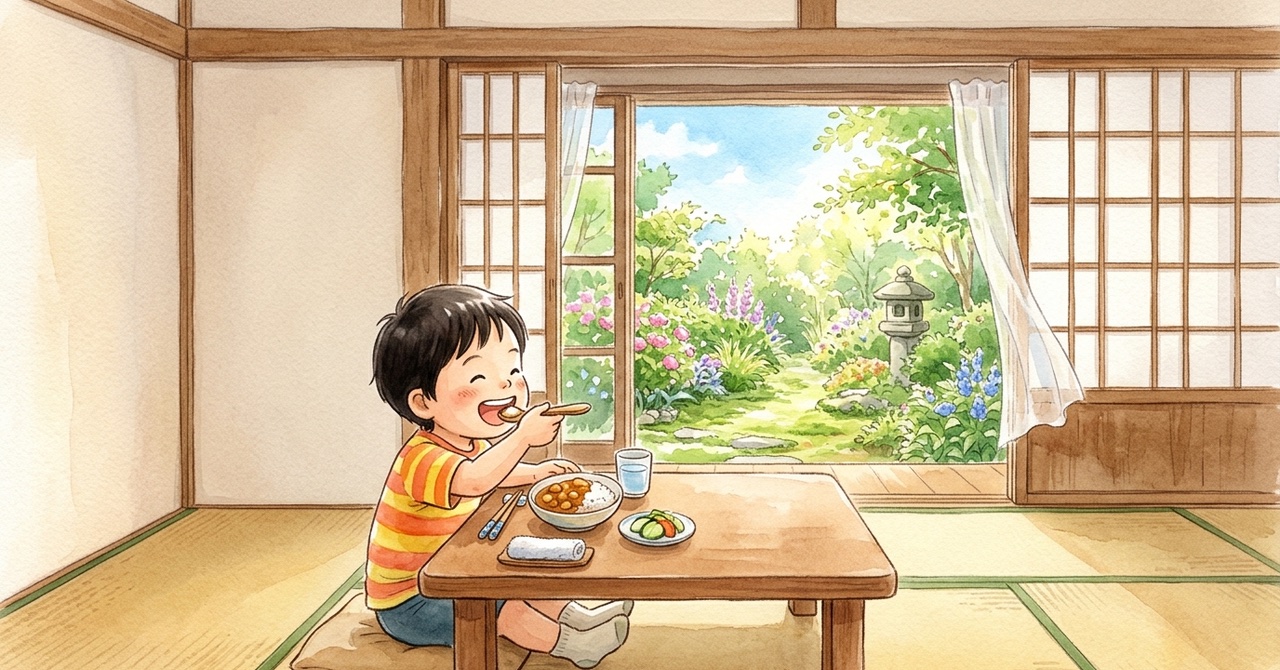
Japanese ています does not always mean that an action is happening in front of you. Compare someone eating now with a window that is already open and remains open.
「ミナさんが 食べています」は、今、食べる 動きの 途中を 表せます。「窓が 開いています」は、窓が 開いた 後の 状態を 表せます。形は 同じ「ています」でも、何を 伝えているかを 比べましょう。
Words to read first
| Japanese / reading | Romaji | English |
|---|---|---|
| 食べます | tabemasu | eat |
| 食べています | tabete imasu | be eating, in the scene below |
| 窓 | mado | window |
| 開きます | akimasu | open, said of the window itself |
| 開いています | aite imasu | be open, in the scene below |
| 状態 | jōtai | state; condition |
What does the sentence tell you?
| Japanese | English for this scene | Meaning |
|---|---|---|
| ミナさんは、今 ごはんを 食べています。 | Mina is eating now. | An action is in progress. |
| 窓が 開いています。 | The window is open. | The open state continues after the change. |
二つ目の 文は、今、窓が 動いている、という 意味では ありません。また、この 一文だけでは、だれが 開けたかは 分かりません。「開きます」と「開けます」は 違う 動詞です。
The second sentence describes the open state, not necessarily movement of the window at that moment. It does not identify who opened it. 開く, “to open” intransitively, and 開ける, “to open something,” are different verbs.
Practice: read the scenes, then answer Q1–Q4
Fictional written scenes created for this lesson. No photograph or real observation is presented. Answer only from the descriptions below.
今の 様子 / What is happening now?
| Scene | Description |
|---|---|
| A | ミナさんは 昼ごはんの 途中です。今も、ごはんを 口へ 運んで 食べています。 / Mina is partway through lunch and is actively eating. |
| B | 窓は10分前に 開きました。それから 開いたままです。今、窓は 動いていません。だれが 開けたかは、この メモには ありません。 / The window opened ten minutes ago and has remained open. It is not moving now. The note does not say who opened it. |
| C | 電気は 少し 前に つきました。今も 部屋を 明るくしています。 / The light came on a short while ago and is still on. |
Q1. Aの「食べています」は、今の 動きの 途中ですか、それとも 食べ終わった 後ですか。
Does 食べています in A describe eating in progress or the time after eating is finished?
Q1 — Answer and explanation
今の 動きの 途中です。メモに「今も、食べています」と あります。
Eating in progress. The description states that Mina is actively eating now.
Q2. Bの 窓に 合うのは、A「窓が 開いています」、B「窓が 閉まっています」の どちらですか。
Which fits scene B: “The window is open” or “The window is closed”?
Q2 — Answer and explanation
Aの「窓が 開いています」です。10分前に 開いた 後、その 状態が 続いています。
A, “The window is open.” The state has continued since it opened ten minutes earlier.
Q3. Bで 窓を 開けた 人を、メモだけから 決められますか。
Can you identify who opened the window from note B alone?
Q3 — Answer and explanation
いいえ。メモには 書かれていません。「窓が 開いています」という 文だけでも、だれが 開けたかは 分かりません。
No. The note does not say. The sentence describing the open window does not identify the person who opened it.
Q4. Cを「電気が ついています」と 言います。この 場面では、明るい 状態が 続いていますか、電気が 消えていますか。
In scene C, is the light still on, or is it off?
Q4 — Answer and explanation
明るい 状態が 続いています。メモに、今も 部屋を 明るくしていると あります。
It is still on. The note says it continues to light the room.
Phrases to use
今、何を していますか。
What are you doing now?
窓が 開いています。
The window is open.
Review
「ています」を 見たら、いつでも 英語の “is doing” に するのでは ありません。動詞と 場面を 確かめます。この 形には 習慣などの 使い方も ありますが、ここでは 今の 動きと、変化した 後の 状態に 絞って 練習しました。
Do not automatically translate ています as “is doing.” Check the verb and context. The form also has uses such as habits; this lesson focuses on current actions and states resulting from a change.
Official references / 文法の 参考
- 東京外国語大学・Vています(進行)/Vていません:解説 — ongoing actions.
- 東京外国語大学・Vています(状態):解説 — resulting states and other uses.
確認日:2026-10-27。The scenarios, practice questions and English translations were created for this lesson. The references support the plain-language grammar explanation.