これは昨日買った本です。
This is a book I bought yesterday.
買った comes before 本.
 Japanese by CCNJapanese for life in JapanAdd on LINE
Put a short past-tense description before a noun. Use the ta-form to say which item you bought, made or brought.
『昨日買った本』では、『昨日買った』が後ろの『本』を説明します。
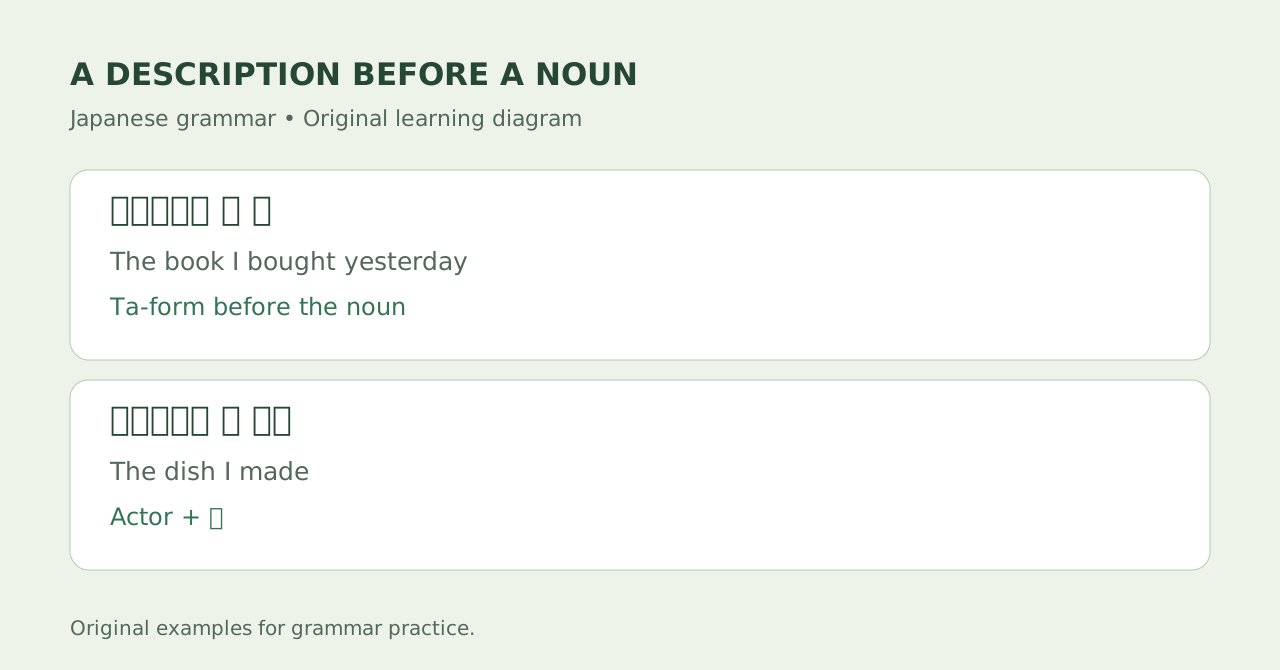
In Japanese the modifying phrase comes before the noun: 昨日買った本. Do not put です between 買った and 本.
『昨日買った本です』と言います。『買ったです本』にはしません。
For this past affirmative pattern, use 買った、作った、持って来た. The final sentence can still be polite: 私が作った料理です.
名詞の前は普通形、文の最後は『です』を使えます。
私が作った料理 states who made the dish. The actor inside this short modifier can be marked by が.
『友達が作った料理』なら、作った人は友達です。
昨日買った本 identifies an item through a past event. It does not itself say whether you have read it. Add a separate sentence if that matters.
『買った』だけでは、『読んだ』ことまではわかりません。
These scenes and exercises are fictional examples written for this lesson.
これは昨日買った本です。
This is a book I bought yesterday.
買った comes before 本.
これは私が作った料理です。
This is a dish I made.
私が identifies the maker.
友達が描いた絵を見ました。
I saw a picture my friend drew.
The modifier identifies the picture.
京都で買ったお菓子です。
These are sweets I bought in Kyoto.
The place is inside the modifier.
Say your answer before opening the explanation.
Q1. Put these in order: 本/買った/昨日。
昨日買った本。
The description comes before the noun.
Q2. Choose: 私が作りました料理 / 私が作った料理。
私が作った料理。
Use the plain past form before the noun.
Q3. Who made the dish in 友達が作った料理?
友達です。
が identifies the actor in the modifier.
Q4. Does 昨日買った本 prove that the person read the book?
いいえ、わかりません。
Buying and reading are different events.
| Japanese | English |
|---|---|
| 料理 | dish; cooking |
| 描きます | draw |
| 昨日 | yesterday |
| お菓子 | sweets |
| 友達 | friend |
私が作った料理です。
It is a dish I made.
Grammar reference: The Japan Foundation, Irodori: Japanese for Life in Japan, Elementary 1. Explanations are concise original summaries; practice examples are original.