
「行きます」「来ます」「帰ります」——どこへ動きますか? / Go, come, or go home?
Check the speaker’s reference place before choosing 行きます or 来ます. Use 帰ります to make the idea of returning home explicit in the scenes in this lesson.
行く 場所だけでなく、話す 人が どこを 基準に しているかを 見ます。この 練習では、話しているときの 場所を 基準に します。「帰ります」は、ここでは 自分の 家へ 戻ることを はっきり 伝えるために 使います。
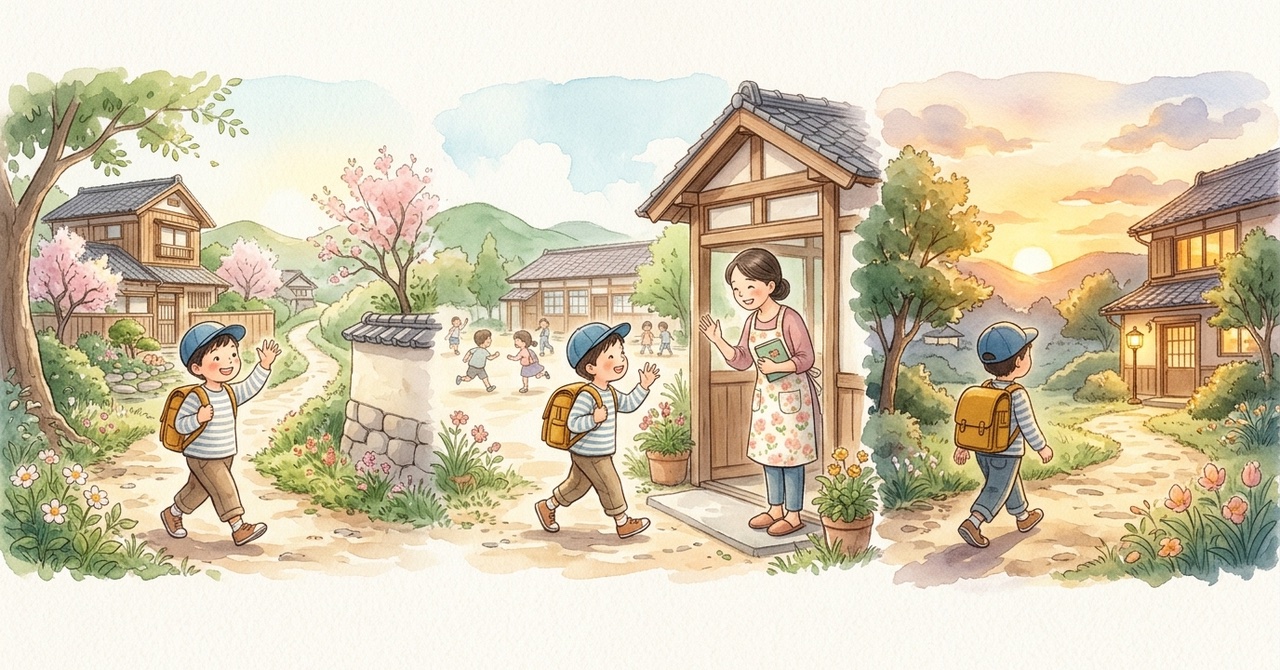
Words to read first
| Japanese / reading | Romaji | English |
|---|---|---|
| 行きます | ikimasu | go |
| 来ます | kimasu | come |
| 帰ります | kaerimasu | return; here, go home |
| ここ | koko | here |
| 教室 | kyōshitsu | classroom |
| 家 | ie | home; house |
Read the reference place
| Scene | Japanese | English |
|---|---|---|
| You are at home. The library is elsewhere. | 図書館へ 行きます。 | I am going to the library. |
| You are in the classroom and ask Mina to move to that classroom. | この 教室へ 来てください。 | Please come to this classroom. |
| You are away from your home and are returning there. | 家へ 帰ります。 | I am going home. |
場所の 後の「へ」は、ここでは “e” と 読みます。向かう 先を 示します。英語の “come” を、そのまま いつでも「来ます」に 変えれば よいわけでは ありません。日本語の 話し手の 基準を 確かめます。
The particle へ is pronounced “e” here and marks the direction or destination. English “come” and Japanese 来ます do not match in every context. Check the Japanese speaker’s reference place.
Practice: read the scenes, then answer Q1–Q4
These are fictional scenes created for this lesson. The arrows describe movement, not real travel routes. For Q1–Q3, use the reference place stated in the scene. For Q3, choose the verb that explicitly means returning home.
場所の メモ / Place notes
| Scene | Speaker and movement |
|---|---|
| A | アレックスさんは 自分の 家に います。これから、家とは 別の 場所に ある 図書館へ 動きます。 / Alex is at home and will go to a library elsewhere. Home → Library |
| B | 先生は 教室に います。ミナさんは 校庭に います。先生は、自分が いる 教室へ ミナさんを 呼びます。 / The teacher is in the classroom and calls Mina, who is in the schoolyard, to that classroom. Schoolyard → Teacher’s classroom |
| C | ミナさんは 学校に います。授業が 終わり、自分の 家へ 戻ります。 / Mina is at school. Her classes are over and she is returning to her own home. School → Mina’s home |
Q1. Aで アレックスさんが「図書館へ(行きます/来ます)」と 言います。この 練習の 基準では どちらですか。
Which verb fits A using the reference place specified in this exercise?
Q1 — Answer and explanation
「行きます」です。今いる 家から、別の 場所の 図書館へ 向かいます。
行きます. He is moving from his current location to the library elsewhere.
Q2. Bで 先生が「この 教室へ(行って/来て)ください」と 言います。どちらですか。
Which form fits the teacher’s invitation to the classroom where the teacher is?
Q2 — Answer and explanation
「来てください」です。ミナさんに、話している 先生の いる 場所へ 動いてほしいからです。
来てください. Mina is being asked to move towards the speaker’s location.
Q3. Cで「家へ(行きます/帰ります)」と 言います。自分の 家へ 戻ることを、はっきり 表すのは どちらですか。
Which verb explicitly expresses returning to one’s own home?
Q3 — Answer and explanation
「帰ります」です。「家へ 行きます」という 文を すべて 間違いに する 問題では ありません。ここでは「戻る」を はっきり 伝える 語を 選びます。
帰ります. This question asks for the verb that explicitly means returning. It does not claim that every sentence containing 家へ行きます is ungrammatical.
Q4. Bの 基準の 場所は、校庭ですか、先生の いる 教室ですか。
What is the reference place in B: the schoolyard or the teacher’s classroom?
Q4 — Answer and explanation
先生の いる 教室です。先生が そこから 話しています。
The teacher’s classroom. That is where the teacher is speaking from.
Phrases to use
あした、図書館へ 行きます。
I will go to the library tomorrow.
もう 家へ 帰ります。
I am going home now.
Review
実際の 会話では、話し手が 注目している 場所を 基準に することも あります。この ページは、その 使い方の すべてを 説明するものでは ありません。まず、だれが・どこから・どこへ 動くかを 確かめましょう。
In real conversation, a speaker can also take a place they are focusing on as the reference point. This lesson uses explicitly stated locations rather than covering every possible viewpoint.
Official references / ことばの 参考
- 国立国語研究所・基本動詞ハンドブック「行く」/「来る」 — movement in relation to the speaker or reference place.
- 東京外国語大学・NへVます:解説 — destination expressions, including うちへ帰ります, and the pronunciation of へ.
- 国際交流基金・エリンが 挑戦! 第2課 見てみよう — the scene of returning home.
確認日:2026-10-27。The scenes, arrows, practice questions and English translations were created for this lesson.