荷物は今日届くはずです。
The package should arrive today.
配送予定に基づき確信を伝える場面です。
 Japanese by CCNJapanese for life in JapanAdd on LINE
Add はずです to plain forms to state that something is expected or scheduled to happen with high confidence.
『荷物は今日届くはずです』のように、確かな根拠がある見通しを伝えます。

Verbs and i-adjectives connect in their plain forms: 届くはずです、来るはずです、高いはずです.
動詞やイ形容詞の普通形につけます。「届くはずです」「来るはずです」のように言います。
For na-adjectives, use な (便利+なはずです). For nouns, use の (休み+のはずです).
ナ形容詞には「な」、名詞には「の」をつけます。「便利なはずです」「休みのはずです」となります。
はずです indicates strong objective confidence based on schedules, track records, or facts, unlike mere guesses (でしょう / かもしれません).
「はずです」は、予定や事実などの客観的な理由がある強い確信を表します。
To say something cannot possibly be true, use 〜はずがありません (strong denial) or 〜ないはずです (expecting that it will not happen).
「〜ないはずです」(しない見通し)や「〜はずがありません」(ありえない確信)などの形もあります。
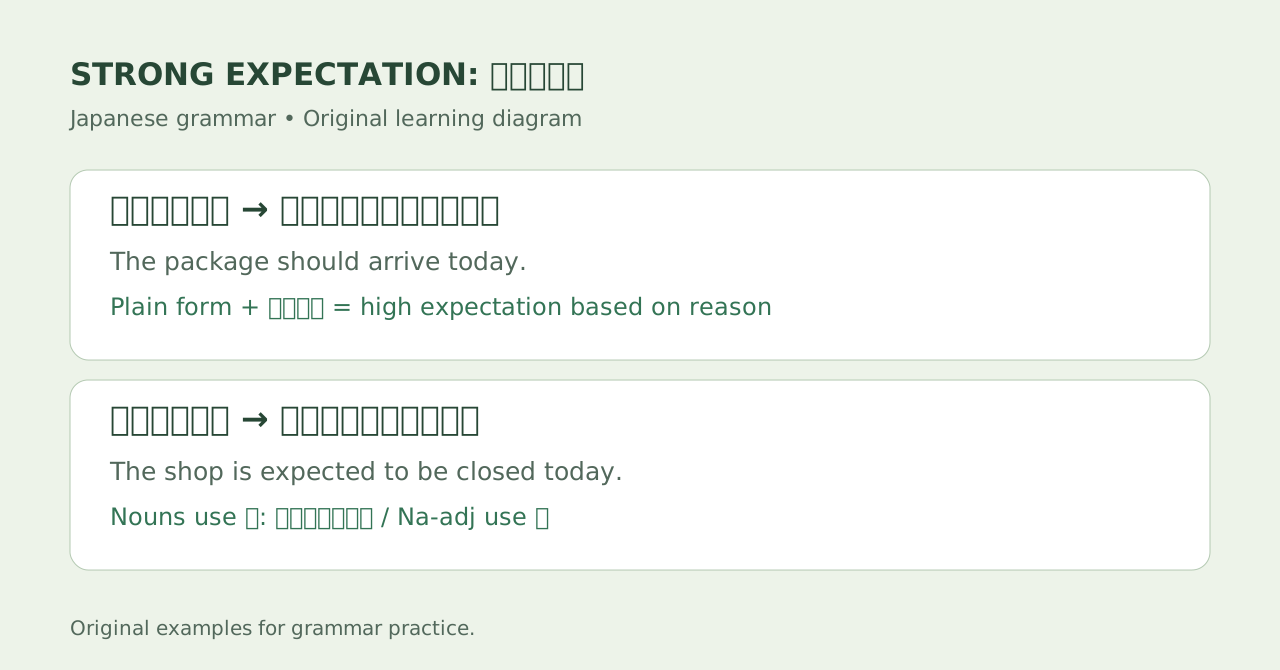
These scenes and exercises are fictional examples written for this lesson.
荷物は今日届くはずです。
The package should arrive today.
配送予定に基づき確信を伝える場面です。
田中さんはもうすぐ来るはずです。
Mr. Tanaka is expected to come very soon.
連絡を受けて同僚に案内する場面です。
この書類で大丈夫なはずです。
It should be fine with these documents.
手続きの準備を確認し安心させる場面です。
あの店は今日は休みのはずです。
That shop should be closed today.
定休日の知識から判断する場面です。
Say your answer before opening the explanation.
Q1. Connect 届く to はずです。
届くはずです。
Verbs connect in their plain dictionary form.
Q2. Connect the noun 休み to はずです: 休み( )はずです。
の
Nouns require の before はず.
Q3. Connect the na-adjective 元気 to はずです: 元気( )はずです。
な
Na-adjectives connect with な before はず.
Q4. In 荷物は届くはずです, is this a pure guess or based on reasons?
理由や予定に基づく見通しです。
はずです implies confidence based on facts or schedule.
| Japanese | English |
|---|---|
| 荷物 | package; luggage |
| 届く | arrive; be delivered |
| 確信 | conviction; confidence |
| 根拠 | basis; ground |
| 見通し | forecast; prospect |
荷物は今日届くはずです。
The package should arrive today.
Grammar reference: The Japan Foundation, Irodori: Japanese for Life in Japan, Pre-Intermediate. Explanations are concise original summaries; practice examples are original.